
Private equity real estate combines institutional investing strategies with tangible property ownership to create long-term wealth opportunities. By pooling investor capital, acquiring undervalued assets, and actively managing them for growth, private equity real estate offers diversification, income potential, and capital appreciation beyond traditional markets.
This guide explains how private equity real estate works, its benefits and risks, and how investors can get started.

What Is Private Equity Real Estate?
Private equity real estate is an investment strategy where capital from multiple investors is pooled to acquire, manage, and sell real estate assets for profit. These assets may include residential, commercial, industrial, or mixed-use properties.
The objective is to increase property value through strategic improvements, operational efficiencies, and market repositioning, then exit at a higher valuation. Profits are distributed to investors based on ownership and fund performance.
Private equity real estate investments are typically illiquid and require a multi-year commitment. They are most often managed by professional investment firms with deep market expertise.
How Does Real Estate Private Equity Work?
Real estate private equity follows a structured investment lifecycle designed to maximize value over time.
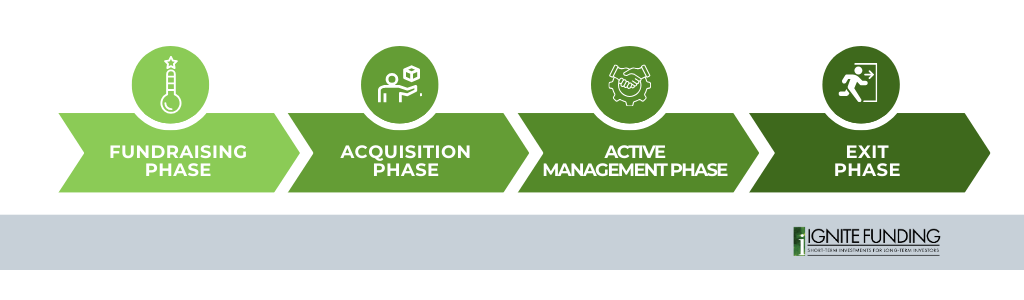
Fundraising Phase
The investment firm raises capital commitments from investors. Funds are not deployed immediately; capital is called as acquisition opportunities arise.
Acquisition Phase
The firm identifies properties aligned with the fund’s strategy, such as undervalued, distressed, or development assets. Extensive due diligence is conducted to assess market conditions, financials, and risk.
Active Management Phase
After acquisition, the firm implements value-add strategies. These may include renovations, operational improvements, tenant upgrades, or repositioning the property within its market.
Exit Phase
Properties are sold when market conditions and asset performance align with return targets. Proceeds are distributed to investors, typically after fees and carried interest.
This lifecycle emphasizes long-term value creation rather than short-term trading.
What Types of Properties Do Private Equity Real Estate Funds Invest In?
Private equity real estate funds invest across a broad range of asset classes, including:
- Multifamily residential properties
- Office and mixed-use buildings
- Industrial and logistics facilities
- Retail and hospitality assets
- Land and development projects
The specific focus depends on the fund’s strategy, market outlook, and risk tolerance.
Private Equity Real Estate vs REITs: What’s the Difference?
Public Real Estate (REITs)
- Traded on public exchanges
- Highly liquid
- Passive ownership
- Performance closely tied to stock market movements
Private Equity Real Estate
- Not publicly traded
- Illiquid, long-term commitments
- Actively managed assets
- Potential for higher returns with increased complexity
Private equity real estate is generally better suited for investors seeking long-term growth and who can tolerate illiquidity.
Who Typically Invests in Real Estate Private Equity?
Private equity real estate investors often include:
- High-net-worth individuals
- Institutional investors
- Family offices
- Accredited investors
These investors are typically comfortable with long holding periods and complex investment structures.
How to Get Started in Private Equity Real Estate
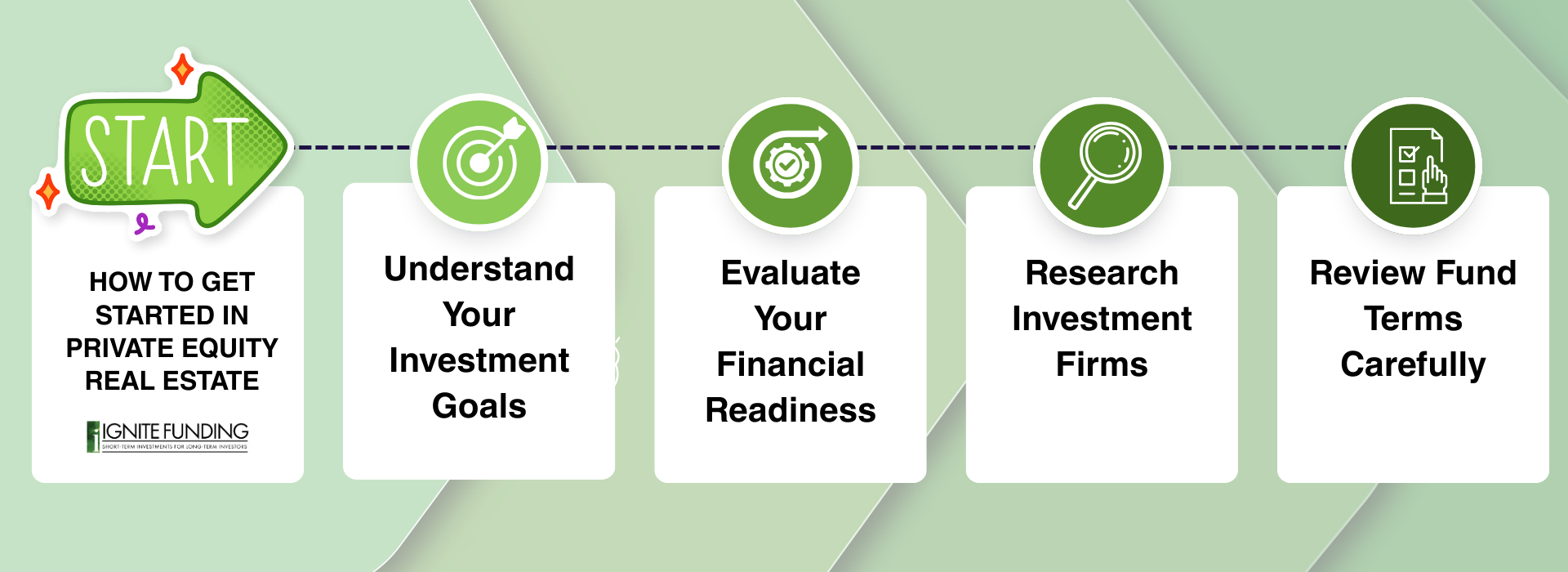
 Understand Your Investment Goals
Private equity real estate is best suited for long-term investors seeking growth, income, and diversification.
 Evaluate Your Financial Readiness
Capital commitments are substantial and illiquid. Investors should maintain sufficient liquidity for short-term needs.
 Research Investment Firms
Look for firms with proven track records, experienced management teams, transparent reporting, and clearly defined strategies.
 Review Fund Terms Carefully
Understand fees, timelines, capital call mechanics, leverage usage, and exit expectations before committing capital.
Professional financial and legal guidance can help ensure alignment with overall investment objectives.
Tax Considerations in Private Equity Real Estate
Key tax factors include:
- Depreciation deductions that reduce taxable income
- Capital gains treatment upon sale
- Interest expense deductions when leverage is used
- State and local tax exposure
- Entity structure, such as partnerships or LLCs
Tax outcomes vary widely, so consultation with real estate-focused tax professionals is strongly recommended.
How Private Equity and Real Estate Create Value Together
Private equity firms apply institutional discipline to real estate investing. This includes:
- Rigorous underwriting and due diligence
- Strategic acquisitions in target markets
- Active asset management and optimization
- Planned exits aligned with market cycles
This combination allows investors to access opportunities and expertise typically unavailable through direct ownership or public markets.
Trends Shaping the Future of Private Equity Real Estate
Sustainability and ESG
Investors increasingly prioritize energy efficiency, environmental impact, and social responsibility.
Technology and PropTech
Data analytics, smart building systems, and automation enhance operational efficiency and improve the tenant experience.
Demographic and Work Trends
Urbanization, remote work, and changing lifestyle preferences are influencing asset demand.
Macroeconomic Conditions
Interest rates, inflation, and capital availability continue to shape valuations and strategy.
Firms that adapt to these trends are better positioned for long-term success.
Is Private Equity Real Estate Right for You?
Private equity real estate can be a powerful wealth-building tool for investors seeking diversification, income, and long-term growth. However, it requires patience, capital commitment, and comfort with illiquidity.
By understanding how real estate private equity works, evaluating risks, and partnering with experienced firms, investors can determine whether this strategy aligns with their financial goals.
For the right investor, private equity real estate offers a disciplined, value-driven approach to building long-term wealth.